Polynesiaphonia is an installation conceived as an album.
A diffusion system designed to carry voices from the Pacific.
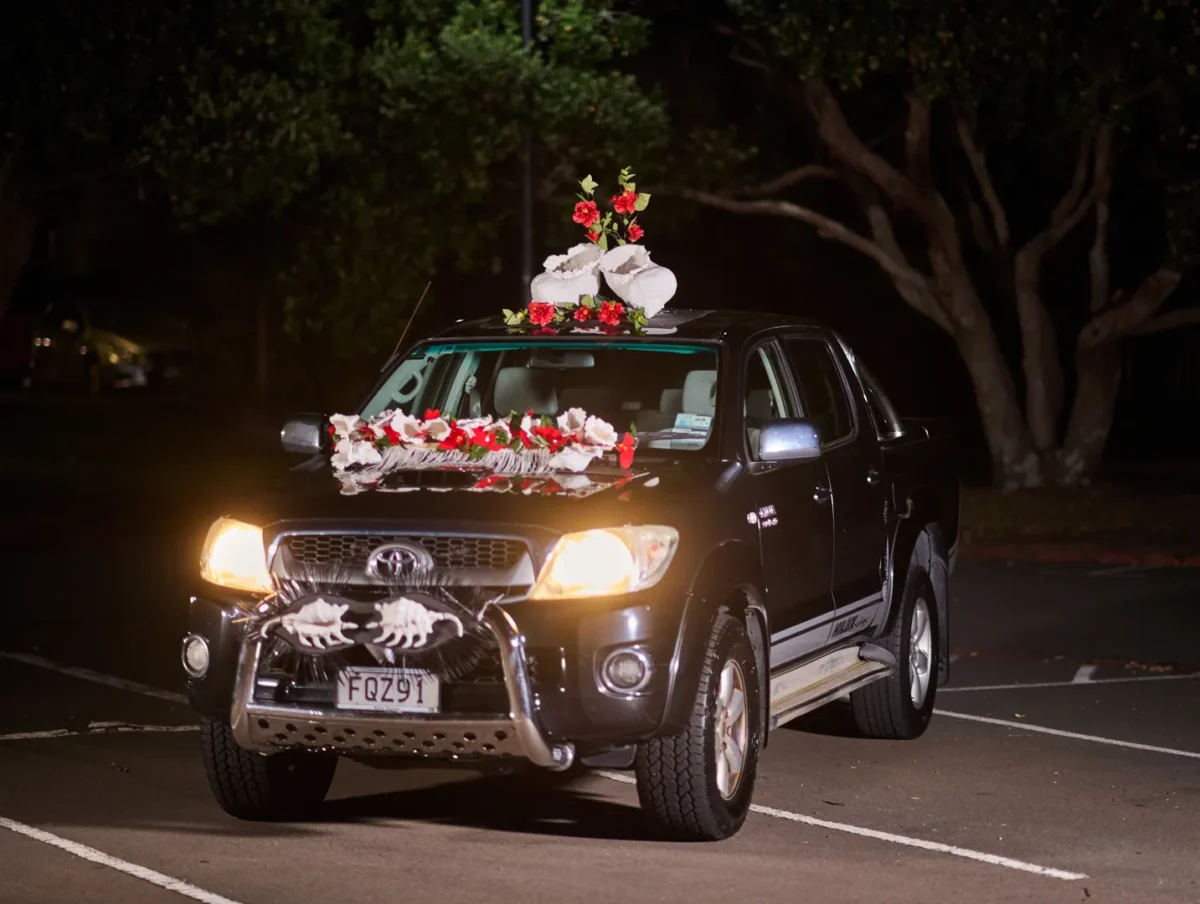
Inspired by the practice of the Siren Kings, a Polynesian community in Aotearoa, the artist observes in the repurposing of alarm horns (used to broadcast songs by Céline Dion from vehicles) a circulation of signals.
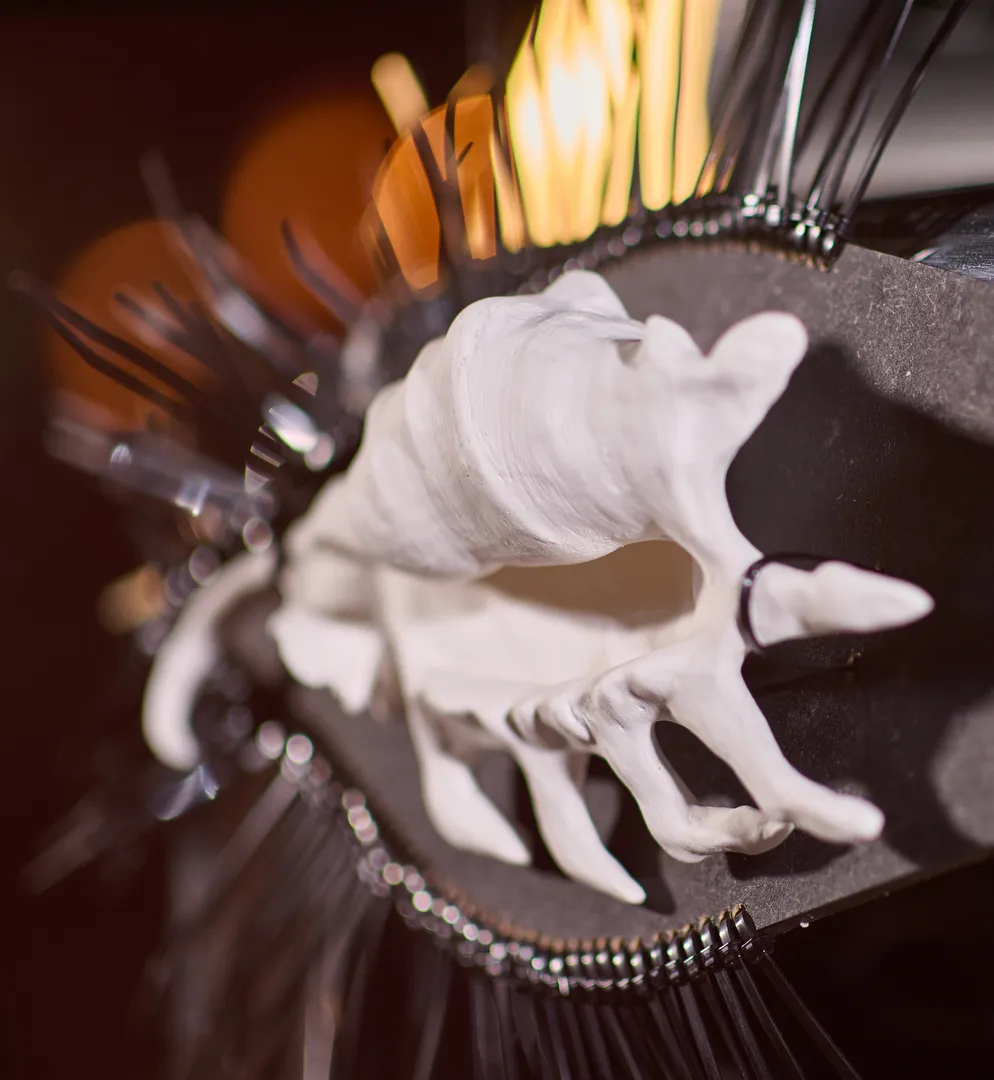
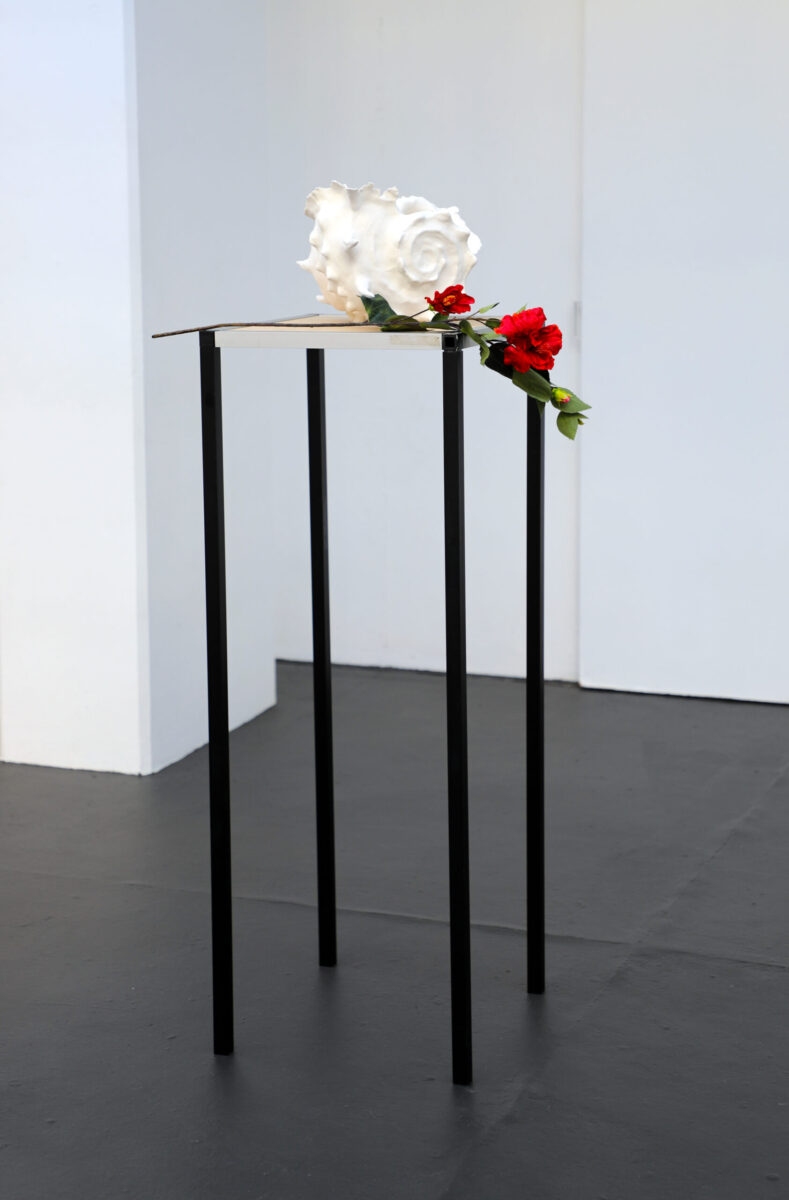
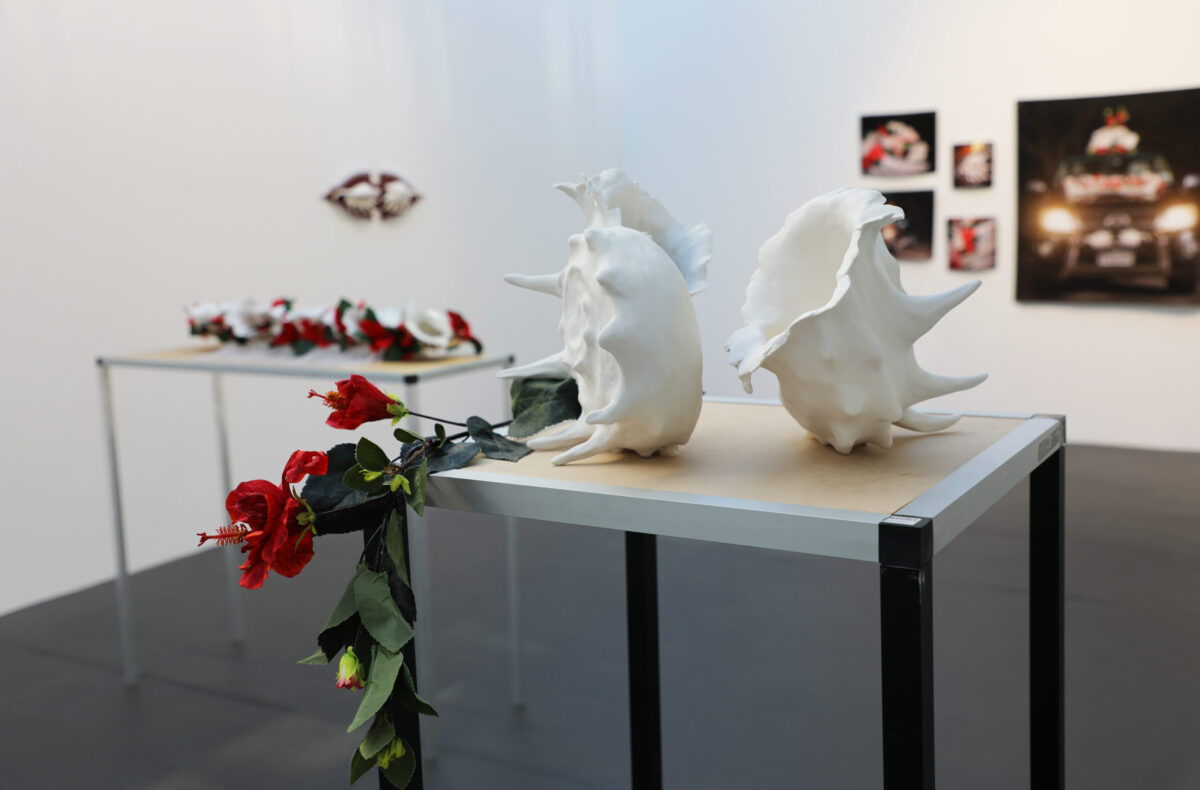
Resonating with an older practice, these horns extend the use of shells, traditionally employed as trumpets to communicate between two shores.
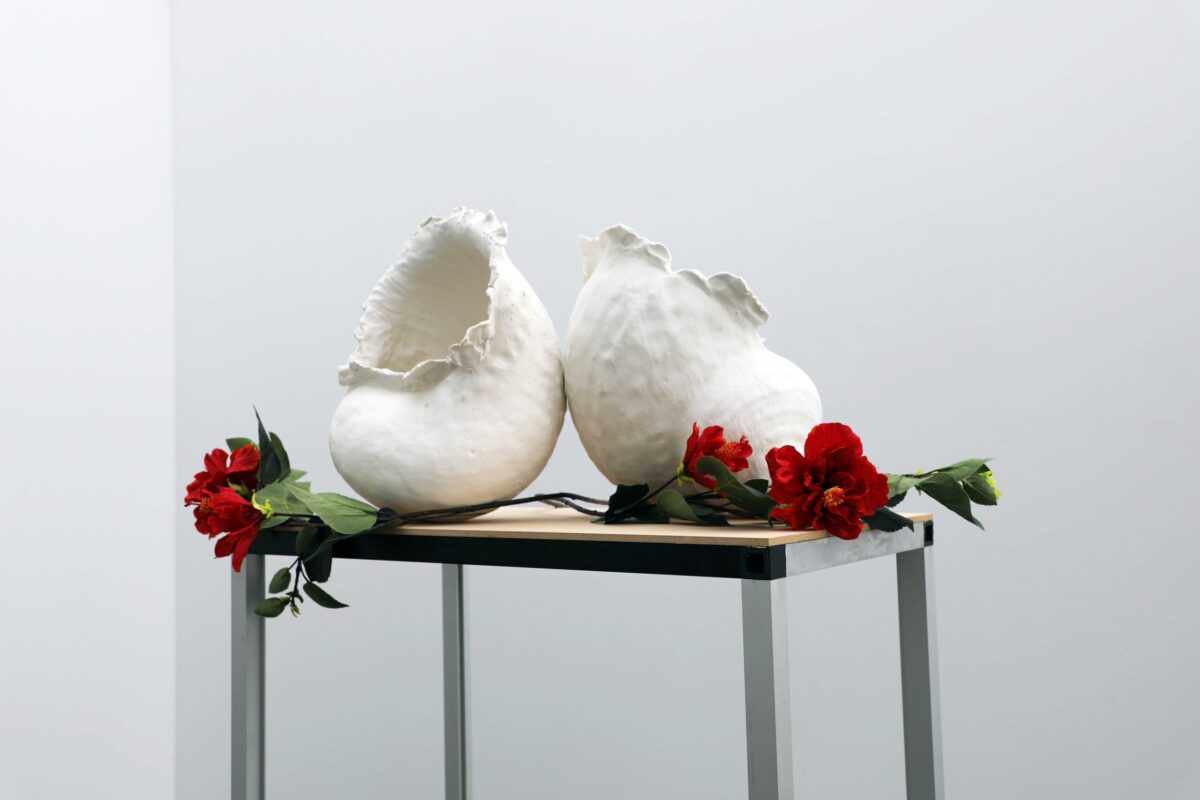
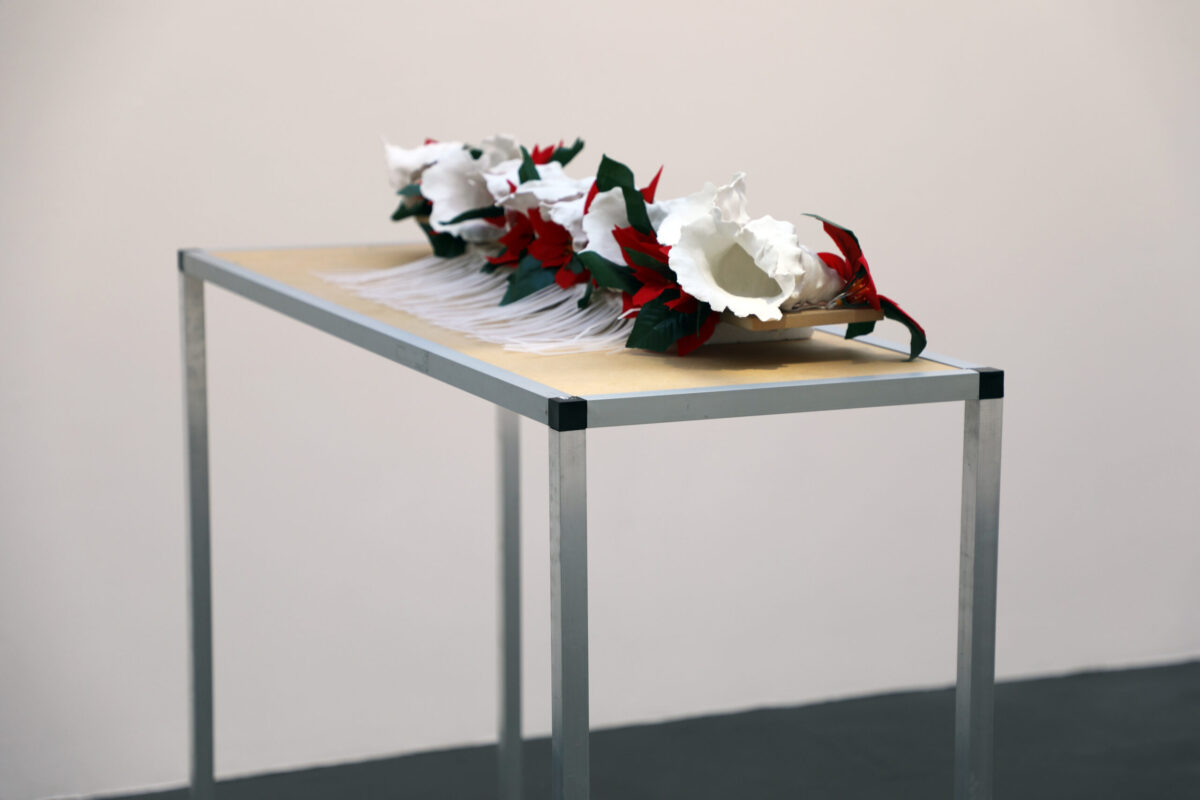
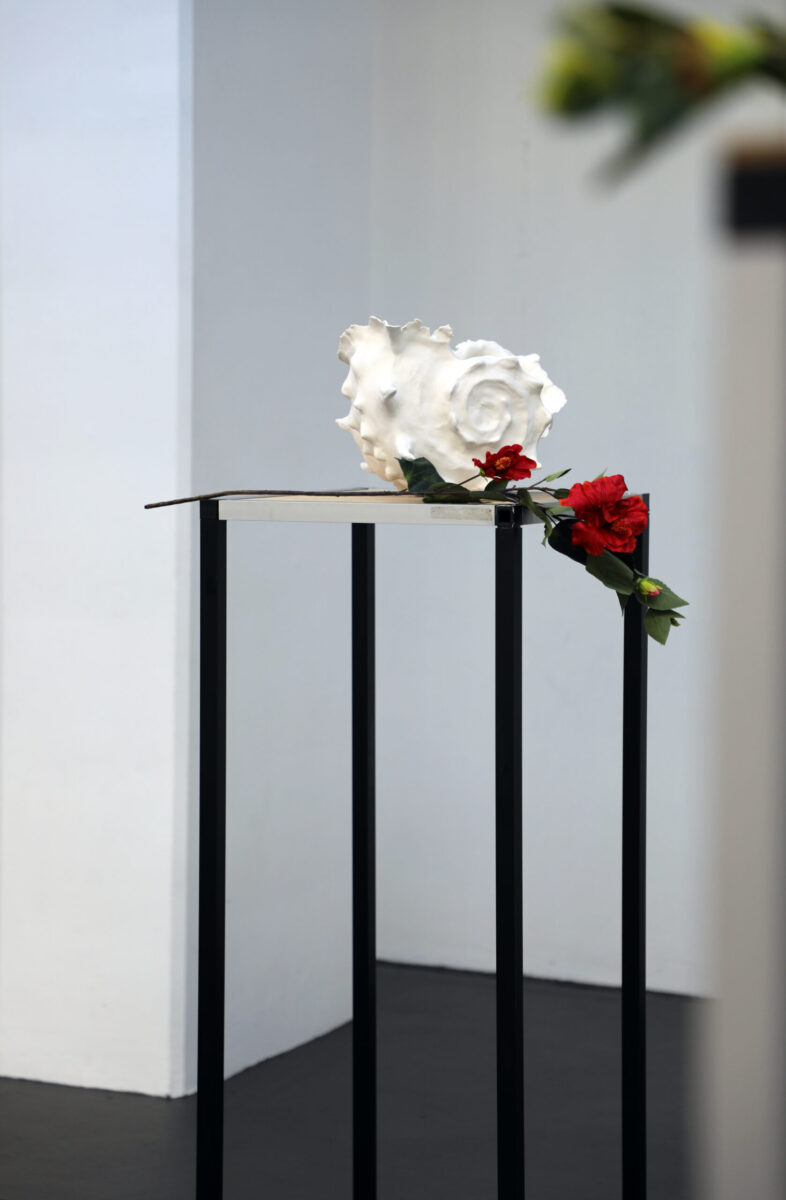
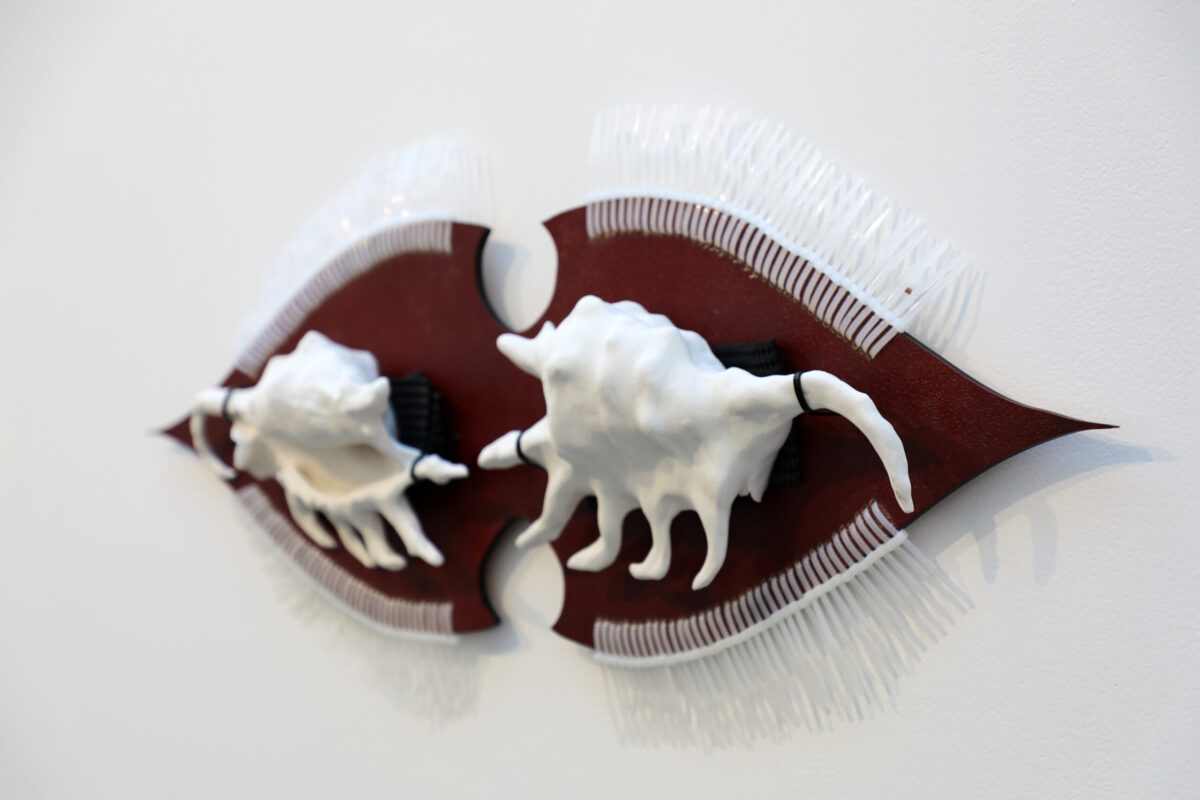
In the exhibition, these shells once again become mouths and bodies of diffusion. Mounted on a pickup truck—an emblematic totem-vehicle of contemporary Polynesia—they form an installation capable of carrying what has not, or has too little, been heard.
Attentive to silent signals that foreshadow disasters, like the sea withdrawing before a tsunami, Camille Bleu-Valentin develops two chants for this first presentation:
Chant.1
A journey back to her childhood spent in New Caledonia.
Marked by a lack of transmission of Indigenous languages and cultures, she chooses to reactivate the only song in a Kanak language learned at school.
An isolated fragment, revealing a political context, now turned into a trace of memory.
Chant.2
An attention to the silence of the birds of the “island of the long white cloud.”
Those we no longer hear. Those that are disappearing.
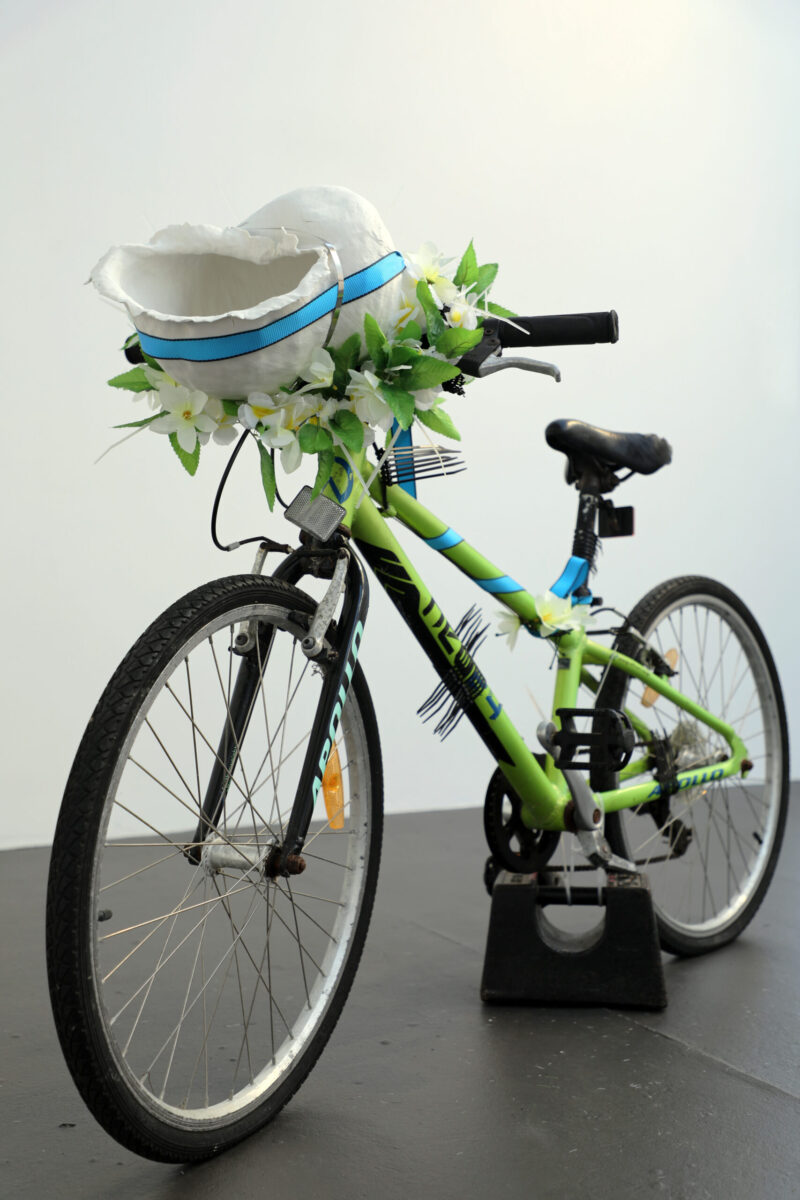
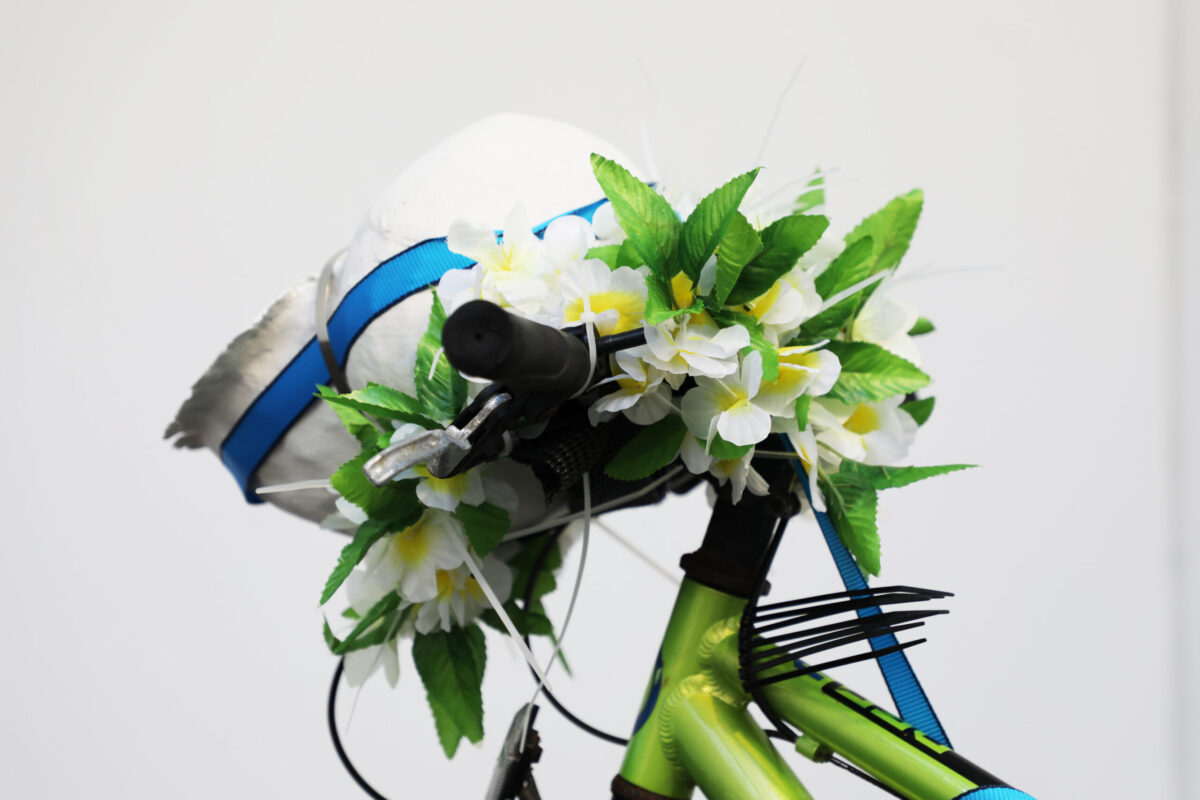
Threatened, paradoxically, by the human ways of life that also attempt to preserve them. Their songs are here replayed, transformed into a techno composition, broadcast at the front of a bicycle—a fragile yet ecological vehicle.
This album is presented for the first time at The Engine Room Gallery.
The former garage becomes, for the duration of the exhibition, a space of repair and creation.
And after all, isn’t it in garages that the best concerts happen ?
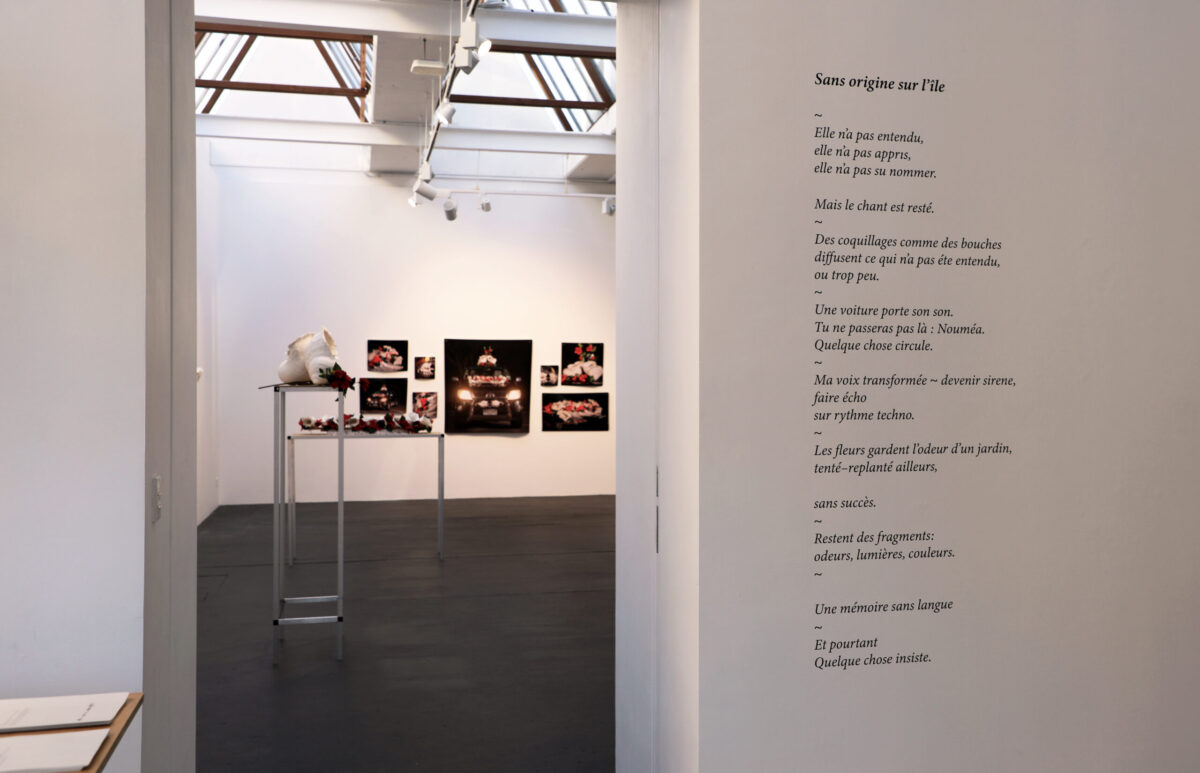
Introductory text to the exhibition:
Without origins on the island
~
She didn’t hear,
she didn’t learn,
she couldn’t name it.
But the song remained.
~
Seashells like mouths
carry what was not heard,
or barely heard.
~
A car bears its sound.
You will not pass there : Nouméa.
Something is moving.
~
My voice transformed — becoming siren,
echoing
through techno.
~
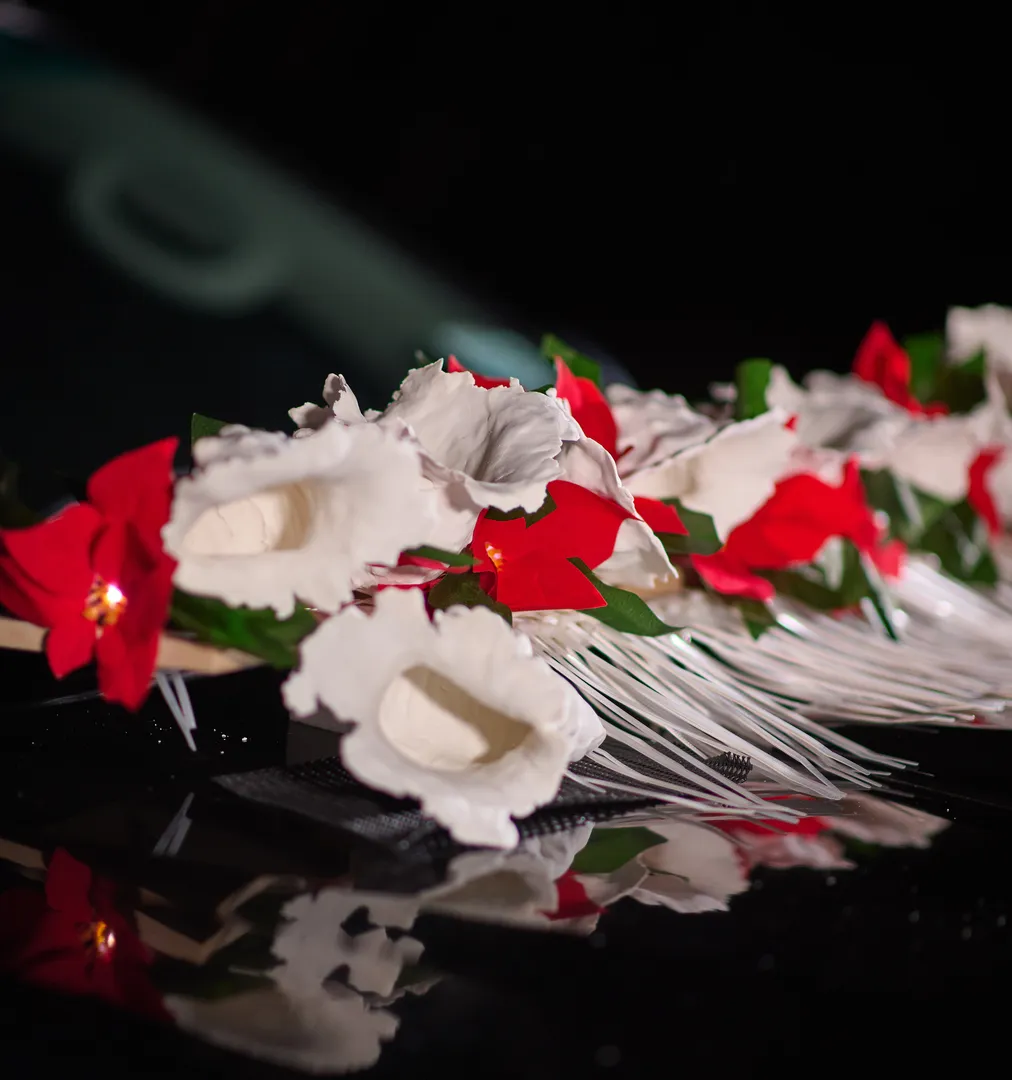
Flowers preserve the scent of a garden,
An attempt to be replanted elsewhere,
without success.
~
Fragments remain:
scents, light, colour.
~
A memory without language.
~
And yet.
Something insists.
~
How the work functions:
The exhibition unfolds as an immersive dispositif combining sculpture, sound, video, and photography. The audience is invited to move freely through the space, from the entrance to the video installation.
Porcelain sculptures, conceived as bodies of diffusion, are activated by integrated sound devices. A first installation, arranged on a vehicle, broadcasts a vocal composition derived from the reactivated chant (Chant.1). A second installation, mounted on a bicycle, broadcasts a sound composition created from bird songs transformed into techno (Chant.2).
A video accompanies the ensemble and activates the sculptures within a performative context. Photographs document and extend these circulations of forms and sounds.
The whole forms a pathway in which the works function as “chants,” both autonomous and interconnected.
This project was realized with the support of the Antipode residency, Massey University, the French Embassy in New Zealand, and Te Whare Hēra.
Special thanks to Amber-Jayne Bain, Emma Febvre-Richards, Martin Patrick, Will Bennett, Caitlin Devoy, Jane Wilcox, Kerry Walton, Mike, Stuart, Benjamin, as well as Bee, Evelina, Skill SAWA SAWA and Edith Amituanai, and more broadly to all those who were present, near or far, and who made this project possible.